Corporate AI adoption has scaled rapidly, moving well beyond centralized IT initiatives. While enterprises capture immediate productivity gains, technology leaders are left managing a highly volatile layer of unmapped exposure through a sprawling network of “Shadow AI.”
This isn’t the old shadow IT problem in a new outfit. Five years ago, an unsanctioned SaaS application still kept data within a predictable cloud bucket. Today, an employee pasting proprietary source code or customer data into an unmonitored browser model is executing an unlogged data leak.
Managing an enterprise AI footprint requires closing several critical architectural gaps across your estate.
1. Compliance & Endpoint Blind Spots
Most organizations lack a real-time inventory of their active AI ecosystem, leaving them blind to interactions happening outside of sanctioned environments. This blind spot is a severe liability under upcoming compliance deadlines for the EU AI Act, as well as auditing standards aligned with the NIST AI Risk Management Framework (RMF). Regulators and framework auditors increasingly require clear, verifiable audit logs of data flows.
Regulators require clear, verifiable audit logs of data flows.
A common flaw in governance strategies is relying entirely on internal API gateways. While network proxies and Secure Web Gateways (SWGs) catch web traffic, they struggle to differentiate between corporate and personal account actions (like a free ChatGPT or Claude profile) without aggressive TLS decryption and complex CASB policies. Employees easily execute unlogged data leaks right under the nose of standard network controls.
To bridge this gap, discovery tools must operate directly at the device layer. By utilizing MDM frameworks (like Jamf or Google Cloud Identity) to deploy lightweight browser extensions and endpoint agents, security teams can catalog and govern ad-hoc web and CLI-driven AI activity across the entire corporate fleet.
2. Vetting the Code: RAG Pipelines & MCP Configurations
AI risk originates long before an end-user types a prompt. The deepest vulnerabilities are built into application architectures by engineering teams using agentic frameworks like LangChain, AutoGen, or CrewAI.
Connecting foundation models directly to internal systems introduces two critical structural flaws:
- RAG Pipeline Vulnerabilities: Connecting models to unsecured vector databases without input sanitization or strict document ingestion validation opens clean paths for indirect prompt injections and data exposure.
- Model Context Protocol (MCP) Exposures: The rapid adoption of MCP has left configuration boundaries unaudited. Unsecured MCP server configurations can expose raw system credentials or grant models unrestricted repository access.
Technology teams need framework-aware static and dynamic application security testing (SAST/DAST), alongside rigorous architecture threat modeling, to audit these non-deterministic design patterns and configurations within the CI/CD pipeline.
3. Tracing the Multi-Agent “Spider Web” at the Span Level
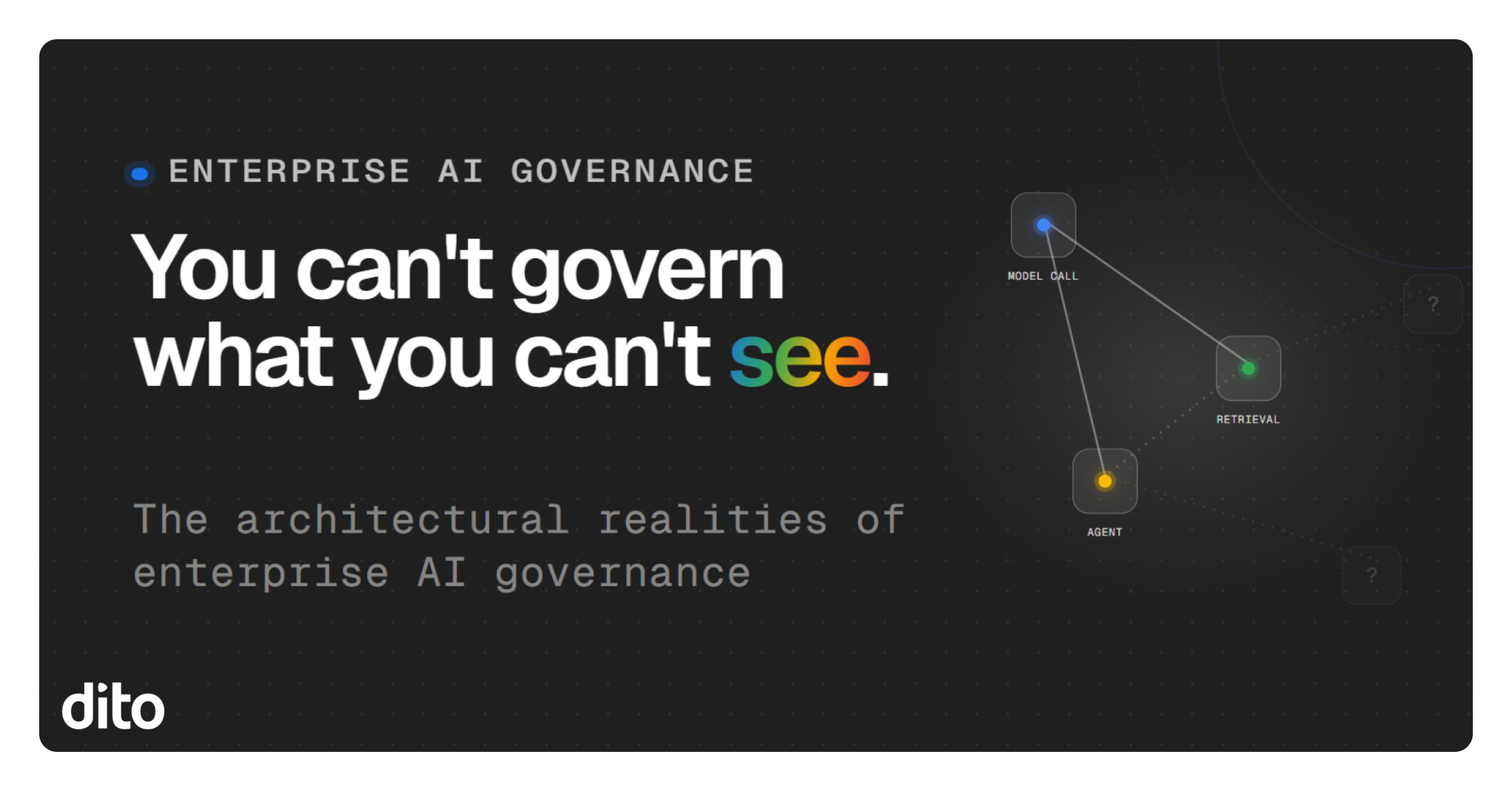
Traditional logging architectures treat an AI transaction as a single-line item: a user request followed by a static reply. However, modern agentic deployments function like an interconnected spider web. A single user prompt can trigger a master agent to autonomously delegate tasks to multiple sub-agents; spinning up a data analyst agent, executing tool calls, and hitting internal databases out of human sight.
Because vulnerabilities, performance lag, and token overruns can occur at any node in this web, high-level observation is no longer sufficient. Organizations require span-level distributed tracing. Telemetry tools must parse and validate data at every individual hand-off boundary between users, sub-agents, LLMs, and data sources to ensure the execution loop remains secure and bounded.
4. Moving Beyond Static Safety Checklists
Vetting an application’s safety posture using fixed prompt checklists provides an outdated snapshot. The second a model updates, its system prompts change, or its vector knowledge base shifts, its defense baseline mutates.
To protect production systems from jailbreaking, prompt injection, and accidental secrets leakage, defensive testing must be continuous and automated. Security teams need continuous adversarial red-teaming; in this case leveraging adaptive, AI-vs-AI attack engines (such as a PAIR engine). By employing an attacker LLM that dynamically learns from a target system’s guardrail responses, you can actively identify and patch exploitable pathways before malicious actors map them.
5. Programmatic Token Optimization via Query Matching
AI token consumption operates on a dynamic variable scale, not a flat SaaS subscription fee. Verbose system instructions, bloated context windows, and unmonitored agent retries quietly drive up cloud invoices without central oversight.
To curb runaway costs, organizations can utilize span-level telemetry to run Semantic Routing and Query Complexity Matching. By evaluating the actual computational complexity of an incoming query in real time, the platform can apply programmatic routing rules and automatically direct simple, high-volume tasks (like basic summarization) to lightweight, cost-effective models, while saving your premium frontier token budget exclusively for high-reasoning workloads.
Unifying Your Estate into an AI Command Center
Managing an AI landscape through a fragmented patchwork of vendor tools introduces operational complexity and traps your team in configuration management rather than risk reduction. Technology leaders need to consolidate discovery, code auditing, red-teaming, compliance logging, and token FinOps into a singular control plane.
It unifies your entire AI architecture, from custom-built agent SDKs and productivity tools (Microsoft Copilot and Google Gemini) to browser extensions tracking shadow endpoints, into a single operational view, deployable in the cloud, on-premise, or within air-gapped data clusters.
Operationalize Your Governance Posture with Dito
Specializing in advanced security and enterprise data architecture, Dito simplifies the implementation of intentional AI governance. Our teams will work together to securely map your active environment, isolate hidden cost and compliance gaps, and outline a blueprint for resilient, optimized AI operations.
Recent Posts
On-Demand